Virtualtryon – The handheld gaming PC market has exploded over the past three years. What began as a niche experiment with the Steam Deck has become a thriving category, with multiple manufacturers competing for a growing audience of players who want to take their PC libraries on the go. The latest generation of handheld PCs—led by Valve’s Steam Deck OLED and ASUS’s ROG Ally X—represents the maturation of the category. These devices are no longer compromised compromises; they are powerful gaming platforms that deliver experiences that rival desktop setups.
The Handheld PC Revolution: How Steam Deck OLED and ROG Ally X Are Defining a New Category
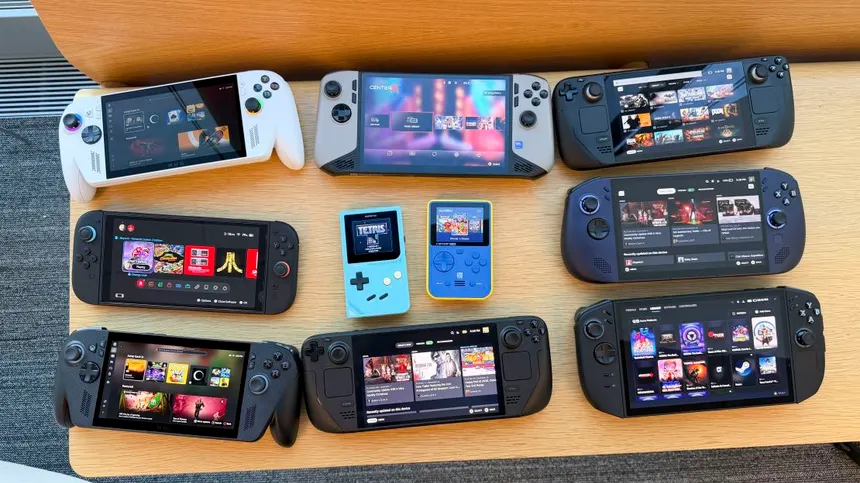
The Steam Deck OLED, launched in late 2025, addressed the primary limitations of the original Deck. The OLED display provides deeper blacks, more vibrant colors, and better battery life than the original LCD screen. The battery capacity has been increased to 50 watt-hours, providing up to eight hours of playtime for less demanding games and three to four hours for AAA titles. The processor has been refined to run cooler and more efficiently, reducing fan noise and improving sustained performance. The device remains the standard against which other handheld PCs are measured.
ASUS’s response, the ROG Ally X, launched in early 2026, takes a different approach. The Ally X runs Windows 11, providing compatibility with every PC storefront and launcher without the compatibility layer that the Steam Deck requires. The device features a 7-inch 1080p 120Hz display, making it better suited for competitive games that benefit from higher refresh rates. The processor, AMD’s Z2 Extreme, delivers higher peak performance than the Deck’s custom APU, though battery life suffers accordingly. The Ally X appeals to players who prioritize raw performance and platform flexibility over battery efficiency.
The competition between Valve and ASUS has driven rapid innovation. Valve has responded to the Ally X’s higher performance by developing a more aggressive performance mode for the Deck OLED, pushing the hardware to its limits when plugged in. ASUS has responded to the Deck’s battery efficiency by developing more sophisticated power management software for the Ally X, extending battery life in less demanding titles. Both companies are developing next-generation devices expected in 2027, with rumors of significant performance leaps.
The third player in the handheld PC market is Lenovo, whose Legion Go 2 launched in mid-2026. The Legion Go 2 features an 8.8-inch display, the largest in the category, and detachable controllers that can be used separately like the Nintendo Switch. The device targets players who want a larger screen for immersive single-player games and who value the flexibility of the detachable controller design. The larger size makes the device less portable than the Deck or Ally, but for players who prioritize screen real estate, the trade-off is worthwhile.
The accessory ecosystem for handheld PCs has matured alongside the devices. Docks that connect handhelds to external displays and peripherals are now standard. Portable power banks designed specifically for handheld PCs provide extended battery life for travel. Cases, screen protectors, and controller grips are available from major accessory manufacturers. The category has reached the scale where third-party support is robust, making the devices more practical as primary gaming platforms.
The software experience for handheld PCs has improved dramatically. SteamOS, the operating system for the Deck, now includes a quick-resume feature that suspends games and resumes them instantly, a feature previously exclusive to consoles. Windows 11 has been optimized for handheld use, with a game bar interface that provides system controls without requiring the user to navigate the desktop. Third-party launchers like PlayNite and GOG Galaxy provide unified libraries across storefronts, addressing the fragmentation that has long frustrated PC gamers.
The handheld PC revolution is not just about hardware; it is about how players engage with their game libraries. The player who has accumulated hundreds of games on Steam over the years can now play them anywhere. The player who was intimidated by building a desktop or configuring a gaming laptop can now access the PC ecosystem through a device that works like a console. The handheld PC category is expanding the audience for PC gaming while providing existing PC gamers with new ways to play.